Monday, May 30, 2022
Friday, May 27, 2022
Thursday, May 26, 2022
Goss' Garage with Pat Goss! 2018!

Wednesday, May 25, 2022
Monday, May 23, 2022
Sunday, May 22, 2022
Wednesday, May 18, 2022
Sunday, May 15, 2022

Monday, April 25, 2022
Tuesday, April 19, 2022
Wednesday, April 06, 2022

Monday, April 04, 2022

Friday, April 01, 2022

Thursday, March 31, 2022

Wednesday, March 30, 2022

Tuesday, March 29, 2022

Monday, March 28, 2022


Saturday, March 26, 2022
Thursday, March 24, 2022
Wednesday, March 23, 2022

Monday, March 21, 2022
To honor Pat Goss, listen to one of his older radio shows! Back in the day he did 3 hours every Saturday on WJFK 106.7 FM in Washington D. C

Sunday, March 13, 2022
Friday, March 11, 2022
Tuesday, February 01, 2022


Thursday, January 20, 2022
Thursday, December 23, 2021
Twas the night before Christmas-Text version!

Twas the night before Christmas and all through the dark.
Not a car was still broken, all those plugs had their spark.
Wrenches were stashed all snug in their boxes.
While me by myself was having Christmas party leftovers, some bagels, and loxes.
Out in the lot there was such a clatter.
I sprang to my feet and yelled Hey what's the matter!
Now what to my blood shot tired eyes should appear.
But some crazy old guy with sleigh with reindeer.
He approached the front door with a smile so bright.
I quickly unlocked it and turned back on the office light.
Excuse me kind sir but I am having some trouble.
The left rudder on my sleigh has started to rumble.
The balancing was wrong pulling much to the right.
Those reindeer have been working too hard, this cold night.
I have so much to do and little time to do it.
Could you please get right too it!
Without saying a word I went to work right away.
Too bad the alignment machine had no specs for a sleigh.
Meanwhile, the reindeer were prancing around.
That Rudolf and comet what a couple of clowns.
In a matter of time the rudder was straight and the alignment done too.
I helped him load up all the presents, but one.
He wanted to pay me, but cash he had none.
I hope it was from Sears a one half inch air gun.
He started the sleigh by calling their names.
Come now, Dasher!, Prancer and Blitzen!
Get off your butts Comet and Vixen!
It started to idle and float in the air.
Then Rudolf lit up the sky with his nose extraordinaire.
I heard him exclaim, ere he drove out of sight.
Happy Christmas to carfix online, and to all a good-night!
Thursday, December 09, 2021
Thursday, December 02, 2021
Wednesday, November 24, 2021
Monday, November 01, 2021

Monday, October 04, 2021
Pat Goss answers this one- If a 2007 Honda CRV only has 110,000 miles on it, is that a red flag?
Sunday, August 01, 2021
Tuesday, July 06, 2021
Pat Goss on Is a Neo-socket fuel saver effective?
Friday, June 25, 2021
Pat Goss Answers this one! What are the upsides and downsides of buying a used car from a private party whom you don't know but found in an ad, versus buying a vehicle from a used car lot?
Tuesday, June 01, 2021
Thursday, May 06, 2021
Pat Goss answers: Do cylinder deactivation systems cause engines to wear out?
Monday, May 03, 2021
Wednesday, April 14, 2021
Batteries and sparks! Oh My!! (Pat Goss answers this one.)
A spark around a warm or hot battery (from charging by a charger or another running car) can cause the battery to explode. As batteries are charged they can produce hydrogen gas which in the right concentration can be highly explosive. It has been estimated that an exploding battery can generate as much explosive power as three sticks of dynamite.
Here’s the rub with batteries, even most “sealed” batteries are not sealed in the sense you might think they are. They are sealed to the extent that they have check valves that prevent the escape of gasses during normal charging but during periods of over charging these control valves allow some escape to prevent a too high internal battery pressure. So most batteries can generate enough hydrogen gas to become explosive under the proper circumstance.
During jumping (which I would never do. You can do every step 100% properly and still damage one or both cars or blow yourself up) the charge rate may be largely unregulated and cause the battery to become overheated which in turn can cause hydrogen gas to escape.
Because hydrogen gas is explosive in the right concentration both booster cables should never be connected directly to the discharged battery (the car has failed to start through multiple attempts and the booster cables have led to higher temps). Consequently the final booster cable connection should be made at the car with the dead (and hot) battery. This is also the first cable to be removed.
But, that final booster cable connection should be made at a clean metal part of the engine as far away from the battery as possible, never to the battery itself. When that final connection is made there will be a spark and you want that spark as far away from any hydrogen gas as is possible to minimize the possibility of explosion.
When installing a battery it will not normally be overheated or be in an enclosed space where hydrogen gas can collect. Therefore, although there will be a spark when the final connection (negative cable) is touched to the battery post it is far less likely to cause an explosion. But there are instructions in the vehicle service manual on how to protect one’s self from the effects of an exploding battery and these instructions should be closely followed.
Sunday, March 21, 2021
Saturday, March 20, 2021
Friday, March 19, 2021
Monday, February 15, 2021
Tuesday, February 09, 2021
Profiles in the Automotive Industry- Elon Reeve Musk

- Elon Reeve Musk is an engineer, best known as cofounder PayPal, founder SpaceX, early investor and CEO Tesla, founder Boring Company, and more.
- Elon Reeve Musk was born on June 28, 1971, in Pretoria, South Africa.
- After his parents divorced in 1980, Musk lived mostly with his father in Pretoria.
- Musk graduated from Pretoria Boys High School in South Africa.
- At age 10, he developed an interest in computing using the Commodore VIC-20.
- He learned computer programming using a manua. By12, he sold a BASIC-based video game Blastar to PC and Office Technology magazine for approximately $500.
- An awkward and introverted child, Musk was bullied throughout his childhood and was once hospitalized after a group of boys threw him down a flight of stairs.
- He attended Waterkloof House Preparatory School and Bryanston High School before graduating from Pretoria Boys High School.
- He moved to Canada in 1989, lived with a cousin in Saskatchewan, and worked odd jobs at a farm and lumber-mill.
- In 1990, Musk entered Queen’s University in Kingston, Ontario.
- Two years later, he transferred to the University of Pennsylvania; he graduated in 1997 with a BS in Economics from the Wharton School and a BA in Physics.
- In 1994, Musk interned in Silicon Valley at an energy storage start-up called Pinnacle Research Institute and at start-up Rocket Science Games.
- In 1995, Musk, co-founded Zip2, with his brother Kimbal and Greg Kouri. Using funds from angel investors, Zip2 developed an internet city guide for publishers.
- Musk slept on the couch and showered at the YMCA. He coded at seven nights a week, so the company’s single computer could be used in the day for business.
- Zip2 obtained contracts with The New York Times and the Chicago Tribune.
- In 1999, Compaq acquired Zip2 for $307M in cash. Musk received $22M for his 7%.
- In March 1999, Musk co-founded X.com, an online financial services and e-mail payment company, with $10 million from the sale of Zip2.
- One year later, the company merged with Confinity, which had a money-transfer service called PayPal. The merged company was renamed PayPal in 2001.
- In October 2002, PayPal was acquired by eBay for $1.5 billion in stock, of which Musk received $165 million for his 11.7%.
- In 2001, Musk conceived of Mars Oasis, a greenhouse on Mars to save mankind.
- In 2002, after two failed attempts to buy Russian ICBMs, Musk founded Space Exploration Technologies Corp., trading as SpaceX, with $100M his own funds.
- In 2006, SpaceX was selected as one of two companies to for a crew and cargo resupply demonstration contract to the ISS
- In 2008, SpaceX received $1.6 billion for a Commercial Resupply Services program.
- Starting in 2011, SpaceX was funded to develop the Dragon 2 crew capsule.
- SpaceX’s goal is to reduce the cost of human spaceflight by a factor of 10. SpaceX successfully landed the first stage near the launch pad and later on a drone ship.
- In 2018, SpaceX launched the Falcon Heavy, the most powerful rocket in operation.
- In 2015, SpaceX began development of the Starlink constellation of LEO satellites to provide Internet access. The total cost of the decade-long project will be $10B.
- In May 2020, SpaceX launched its first manned flight, the Demo-2 to the ISS.
- Musk hopes to send humans to Mars within 20 years, with the first launch in 2022.
- In 2004, Musk led the Series A round of investment in Tesla. He joined Tesla’s Board as Chair. Musk became CEO and product architect in 2008.
- Tesla first built an electric sports car, the Tesla Roadster, in 2008, with sales of about 2,500 vehicles to 31 countries. Tesla began delivery of its Model S in June 2012.
- The Model X, announced in February 2012, was launch September 2015.
- In July 2016, Gigafactory 1 was opened near Reno, NV. Gigafactory 1 produces 35 GWh/year of batteries. In 2019, Musk opened Tesla’s Shanghai Gigafactory.
- In 2016, Tesla began developing Autopilot in-house after dropping Mobileye.
- In 2019, Musk unveiled the Tesla Cybertruck with commercial production in 2021.
- As of 2020, the Tesla Model 3 is the world’s best-selling electric car (500,000 units).
- In 2016, Musk owned about 28.9M Tesla shares, equal to 22% of the company.
- In 2006, Musk co-founded SolarCity, which his cousins. By 2013, SolarCity was the second largest provider of solar power systems in the United States.
- In 2012, Musk announced that SolarCity and Tesla would collaborate to use electric vehicle batteries to smooth the impact of rooftop solar on the power grid.
- Tesla acquired SolarCity for over $2 billion in 2016 as its solar division
- In 2016, Musk co-founded Neuralink, a neurotechnology start-up company to integrate the human brain with AI. These enhancements could improve memory or allow more direct interfacing with computing devices.
- After being stuck in traffic, he founded The Boring Company to create traffic tunnels.
- A tunnel beneath the Las Vegas Convention Center was completed in early 2020.
- In 2013, Musk unveiled Hyperloop, a concept for high-speed transportation system reduced-pressure tubes in which capsules ride on an air cushion.
- In December 2015, Musk announced OpenAI, a not-for-profit AI research company. OpenAI wants to keep large corporations from gaining too much power with AI.
- Musk is chairman of the Musk Foundation to provide solar-power energy systems in disaster areas as well as other goals. Since 2002, he has made over 350 contributions.
- In 2020, Musk has become the world’s richest person, as his net worth crossed $185B, taking the top spot from Amazon founder Jeff Bezos.
- Musk does not really care about money. He is an engineer. He has sold all of his home so he can live a simply life and continue inventing.
How often do you have to change the 12V battery in a passenger car?

Monday, January 25, 2021

Monday, January 18, 2021
Monday, January 11, 2021
Thursday, January 07, 2021

Sunday, January 03, 2021
Friday, January 01, 2021
Profiles in the Automotive industry:John J. Mooney, an Inventor of the Catalytic Converter

John Joseph Mooney (April 6, 1930 – June 16, 2020) was an American chemical engineer who was co-inventor of the three-way catalytic converter, which has played a dramatic role in reducing pollution from motor vehicles since their introduction in the mid-1970s.
While serving in the United States Army from 1955 to 1956, Mooney was assigned to a series of nuclear tests in the Pacific Ocean at Enewetak Atoll in the Marshall Islands, which included 17 atom bomb and two hydrogen bomb tests. Mooney was as close as 7½ miles from fission bomb tests.[1]
Mooney came to Engelhard in 1960, after graduate school, as a result of a connection made in an electrochemical engineering course. He worked at the company's Gas Equipment Division. Among his first tasks there were purification of hydrogen, purification and catalysis of ammonia into hydrogen and nitrogen and a process for using a ruthenium catalyst to produce hydrogen from liquid ammonia for the United States Air Force. As a result, the Air Force was able to easily supply hydrogen for weather balloons, since it was more efficient to ship liquid ammonia to distant locations than cylinders of gas.
The 1970 amendments to the Clean Air Act required significant reductions in hydrocarbon, carbon monoxide and nitrogen oxide emissions. The converters available at the time were oxidation catalysts, which could handle hydrocarbon and carbon monoxide, but were ineffective in reducing nitrogen oxides. Car manufacturers and catalyst companies were trying to develop a multiple step process that would address hydrocarbons and carbon monoxide in one process while reducing nitrogen oxides in another.
Chemist Carl D. Keith and Mooney with their team at Engelhard came up with the first production catalytic converter in 1973. The three-way catalyst developed by them allowed all three exhaust pollutants (hydrocarbon, carbon monoxide, and nitrogen oxides) to be remedied using a single catalyst bed. Their solution to addressing the variations in air/fuel mixtures was to combine rare-earth oxides and base metal oxide components in the catalyst together with Platinum and Rhodium in a ceramic honeycomb with tiny passages coated with the catalytic material. This design ensured that the oxygen needed in the reactions was absorbed when it was in excess and released when it was needed, allowing all three pollutants to be removed in a single catalytic component. The three-way catalytic converter reduces nitrogen oxides to nitrogen and oxygen, oxidizes carbon monoxide to carbon dioxide and oxidizes unburnt hydrocarbons to carbon dioxide and water.
Jan 2021 Monthly quiz in Audio format!
Thursday, December 10, 2020
Ode to Santa and the Economy

There goes Santa, running for his sleigh;
He’s gotta run fast, to get away.
You see, the economy has struck the North Pole as well;
The elves are on strike, and his wife is givin' em' hell.
These days when Santa appears at the local department store;
It’s not just for fun or photos, but for gifts he needs to score.
He'll check the store layout and make a quick dash;
Why even Santa max'd out his credit card and is low on cash.
So off he goes, into the night;
To find those gifts, and get out of sight.
Now, he’s not going to make a whole lot of stops;
‘Cause look out Santa… here comes the cops.
Santa leaps to his sleigh and flys far into the night;
Carrying all those gifts, on his yearly flight.
Way into the morning, the police search high and low;
Only to find a few tracks left in the snow.
You'll hear all the alarms blaring, late into the night;
But old Saint Nick will be long gone, and clean out of sight.
Santa has to be quick, to have it done by Christmas Eve;
So many gifts, and so many places to be…
The presents will be wrapped, and the tags will be off;
Cause old Santa is very careful, not to get caught.
So check your presents, early on Christmas day;
(Keep it hush-hush if they're from Santa, OK...?)
Now, I don’t know if Old Saint Nick, stopped at your house or not;
But If he did … … … … …
.....THOSE GIFTS ARE . . . HOT ! !
Created by Scott "Gonzo" Weaver ... thank you Scott for the submission!
Tuesday, December 01, 2020
Inventions & Profiles in automotive Industry- Discovery of "SYNTHETIC" oils
Long before man discovered petroleum oil, rendered animal fat, whale oil and vegetable oil were used as lubricants. These oils can be considered the first synthetic oils because they were man-made from ingredients in his environment. It wasn't until the 1860's that petroleum oil became a popular lubricant.
In the 1930's, Standard Oil of Indiana perfected the process of synthesizing high-quality lubricating oil from biological compounds such as animal fat and plant seed oil. Even though this new oil was a terrific lubricant, its value was offset by its high cost. Subsequently, the formulas were shelved and began to gather dust in the archives of the U.S. patent office.
During World War II, the U.S. successfully cut off Germany from the rich oil reserves of the Arabian countries. The plan was to starve Hitler of petroleum, a most necessary ingredient for any war machine to function. Without gas and oil, Hitler's army would come to a screeching halt. Gasoline wasn't necessary, because the military tanks and hardware could be retuned to run on alcohol made from corn and other forms of biomass. But there was still a need for lubricating oils.
Using information gained from the archives of the U.S. patent office, Hitler put his best scientific minds to work to produce oils from alcohol and natural gas. Soon, the wheels of his army's machinery as well as his aircraft engines were lubricated by high-quality manmade oils. Rommel was running circles around the U.S. Army because his tanks had superior lubricants and could easily withstand the rigors of the desert heat.
When our troops overtook Hitler's army, they often found Nazi military jeeps and VWs left behind with a rock wedged against the accelerator pedal. The Germans didn't have time to destroy the vehicles and thought that the engines would blow up if left running at full throttle. But because of the incredible synthetic lubricants that were used, the engines merely ran until the fuel tank was empty and died. Our troops refueled them and continued chasing Rommel with some of his own machinery!
During this time, Both Hitler and the U.S. were developing jet propulsion. We were having a difficult time keeping jet turbines from destroying themselves because of the extreme operating conditions they had to endure. The inside of the turbine reached somewhere around 600'F while the outside had to withstand -40~ There wasn't a lubricant made that could take that kind of punishment. But Hitler's highly developed synthetic oils were able to operate under those conditions and his air force had the first jets.
After the war, the U.S. military was anxious to get its hands on the German military secret oil formulations. After we captured the German scientific archives in Berlin, their top secret formulations were turned over to the big five oil companies for further research.
A brilliant chemical engineer named Pete Peterson became America's top synlube expert, working to implement the German formulations. During this time more than two dozen small companies began producing synthetic lubricants for the military, and Peterson consulted with them to bring on the new age of synlubes.
In the late sixties, a fighter pilot named Alvin Fagan retired and started the first synthetic oil company to sell to the general public: All-Proof, of Duluth, Minn. Fagan reasoned that vehicles operating in the harsh northern winters could benefit from synlubes because of their ability to withstand extreme cold temperatures.
Fagan was not a marketing genius and his products were very slow to catch on. He employed another retired pilot, Albert Amatuzio, who had a vision of starting his own synthetic oil company. Amatuzio borrowed money from his brother, Dick, and took the formulations he learned about from Fagan and opened Amzoil across the river from All-Proof in Superior, Wis.
Amatuzio employed multi-level marketing (MLM) strategies for his synlubes similar to those used by Amway. MLM was hot and the company flourished. Meanwhile, Amatuzio's brother, Dick, still owned 40% of the company and, for unknown reasons couldn't get any money for his shares. He ultimately sued and left, leaving a scar between the two that endures today. Soon after this incident, Pennzoil sued Amzoil for copyright infringement, claiming that Anizoil's name was too similar to Pennzoil. They won the suit and Amatuzio had to change the name to Amsoil.
During the same time, John Williams, owner of Pacer Petroleum products, bought a new car for his daughter who was about to go off to college. He wanted to put an oil in the engine that would be able to last for the whole year she was away. So he filled it with new synthetic oils. She told a few friends about the wonderful oil her dad had put in the engine. Soon, the school auto shop heard the story and wanted to talk to her about this new, long-lasting lubricant.
It didn't take long for the local media to get wind of the story. Before he knew it, Williams was flooded with calls from people wanting to know more about this new oil. A man named Sol Levy saw the unique opportunity to join forces with Williams and market this new oil. In 1970 Pacer Petroleum got an SAE grade for the oil and started a division called EON Oil.
All-Proof had been using a formula containing 100% alcohol diester, one of hundreds of esters that were being sold without any wear-protecting additives. Certain diesters will dissolve the zinc coating on engine surfaces and accelerate wear. Unfortunately, Pacer was buying its synthetic oils from AllProof, with disastrous consequences. Pacer had convinced the city of Houston to run a test on their EON brand using the city fleet of vehicles. Soon after, the engines began having camshaft failures and the city sued EON for engine damage.
A number of Pacer dealers began telling people that EON oil was "better than the big oil brand and without the double cross." They were referring to Exxon motor oil which sued them in 1975 for trademark infringement. Exxon pointed out that EON sounded too similiar to EXxon. The case never went to court, but Williams received a settlement from Exxon to facilitate the name change of the company. The settlement (somewhere between 1/2 to 1 million dollars) was supposed to pay for the EON dealers' additional advertising for the name change. Williams pocketed the money, and the dealers received nothing.
Paul Baker, a large EON dealer in California, came up with a new name, mixing the letters to form NEO, and then petitioned Pacer to use the new name. Williams said Pacer Petroleum would use MLM and their synthetic oil under the Ultron name. Norman Lotz was recruited to head up the MLM effort and began undercutting former EON dealers by selling directly to their old accounts. The general idea was to cut EON dealers out of the picture.
Angry about the situation, Baker trademarked the NEO name, and started the NEO company in California in 1976. His basic premise was to use only the finest synthetic oil ingredients available. Unfortunately, he was still dependent on Pacer for his stock and in 1981, Williams threatened to cut off his supply. Meanwhile, Williams sold the EON division to Morton Thiacol, the rocket fuel company, forcing Baker to begin sourcing his own synthetic base stocks and bottling his own oil.
NEO introduced the first 100:1 2-cycle oil, the first synthetic gear lube as well as synthetic ATF. To this day, NEO utilizes the finest base stocks available for their oil. As Baker puts it, "I do not cut corners on our oil, and only use the finest stock, regardless of price."
Meanwhile, during the early seventies, a company called Blaze Oil began rebottling Amsoil and selling it under the Blaze Oil name in the south. Al Ainatuzio wasn't interested in that part of the country and was happy to make a profit selling in an area where his company had very little penetration. It didn't seem like synthetic oil - a product especially suitable for cold climates - would be popular in the hot south. But soon, Blaze was selling as much oil in the southern states as Amsoil was in the north.
Amatuzio later threatened to cut off the supply to Blaze and was ultimately sued for breaking his supply contract.
It was about this time that Amatuzio was taken to task by the federal government for selling synthetic industrial oils with little or no synthetic base stocks. The Feds told him to either stop calling it synthetic oil or put synthetic oil in it. In the mid-eighties, Amsoil stopped using high-quality diester base stocks, substituting cheap olefins instead. Even today, it is rumored that many of Amsoil's synthetic products are actually petroleum products with some synthetic added.
The rapidly rising wholesale costs of diester base stocks had synthetic lubricant prices jumping every six months. While all the other synlube companies had to raise their prices, Amsoil was lowering theirs. Amsoil sells their diesel oil to commercial accounts for less than $2 per quart! This was possible by switching to less effective polyol alpha olefin base stocks. Amsoil dealers began seeing engines sludge up like never before and many stopped using synlubes or changed to other brands of synlubes.
During the seventies, Peter Felice and Tim Kerrigan were working with Pacer Petroleum marketing EON. They were unhappy with Pacer and experienced many problems with mis-labeling, and incomplete additive packages and quality control. They switched to All-Proof. During the demise of Pacer, Kerrigan and Felice started Red Line in California. All-Proof decided to sue them for stealing the idea and started a competing company. Red Line counter-sued and won a $700,000 judgment against AllProof, which forced them to fold.
Not all synthetic oils are created equal. In fact, there is a tremendous difference between Amsoil, NEO, Mobil-1, Syntec, Red Line and the other brands. The chief difference is the base stock, which comprises some 90% of the oil. The base stock is the actual lubricant, the other 10% or so is the additive package.
Petroleum oils, or petrolubes, use a complex mixture of hydrocarbon molecules derived from refining crude oil base stocks into more uniform materials. Refineries remove most of the natural contaminants. The worst for the engine, wax, is never entirely removed and is a problem because it is a poor lubricant and reacts to heat by forming damaging byproducts.
By definition, synthetic oil means that it is not made from petroleum. Petroleum oil is a mixture of hydrocarbons. The refining process, (an extraction procedure, rather than a synthesis procedure), extracts the bad and leaves the good molecules. With a synthesis procedure, chemically smaller molecules of low molecular weight are combined to build a bigger molecule. The resulting high weight molecule is an excellent lubricant.
The relative ability of an oil to lubricate is determined by the components of the base stock. There are two principal classes of base stocks used in synthetic oils: synthesized hydrocarbons and organic esters.
The base stock materials used today for most popular synlubes are made of carbon and hydrogen molecules synthesized from ethylene gas molecules into polyalphaolefin (PAO). In fact, Mobil Oil took out a patent on the name Synthetic Hydrocarbon (SHC) in 1975. This material mimics petroleum molecules, using the good features and eliminating the bad ones. SHC's provide better viscosity characteristics than petrolubes, especially low temperature operating properties. SHC's are also more resistant to
o*dation. However, there is no significant improvement in the
degree of thermal stability because they are still hydrocarbon molecules which are very similar to petroleum hydrocarbon molecules.
Some of the popular brands of PAO oils include Amsoil, Mobil-1 and Castrol Syntec. PAO's are the cheapest synthetic oil base stocks. You can purchase them for as little as $3 a quart. PAO's aren't as durable as the other class of synthetic oils, the esters.
Organic esters are made by reacting certain acids with alcohols forming acid esters, diesters and polyol esters. This process uses expensive materials and results in an oil that costs about $8 per quart. NEO claims to use alcohol diester base stocks. Amsoil started out using diesters, but changed in the mid 80's to a blend of several synthetic base stocks with PAO being the main ingredient. Red Line uses polyol ester base stocks which are modified to improve thermal stability and performance.
All synlubes use widely differing additive chemistry. Some use highquality additives, some use cheap ones. None of the synthetic oils have problems with wax contamination because they are man made and don't come from crude oil. The esters have a big advantage because they are natural engine detergents. Right from the start, they have better sludge dispersing capability. PAO oils require detergent-dispersant additives and viscosity improvers.
It is important to know that synthetic oil companies are not completely divorced from using crude oil petrochemicals. Oil wells are still necessary to produce thete petrochemicals, which are used in the synthesis process. A considerable amount of energy is needed to build the synthetic materials. The amount of petrochemical needed varies with the type of base stock utilized. While PAO's are derived from 100% petrochemicals, esters are largely biological in origin and require less petrochemicals.
To lower costs, some synthetic oils contain petroleum oils in their base stocks. These oils are actually parasynthetic or semi-synthetic oils. In Europe, some oil companies are simply adding hydrogen to petroleum oil and calling it synthetic oil. It is truly a gray area, requiring clarification, SAE standardization and truth-in-labeling.
Tuesday, November 10, 2020

 Listen by clicking on MP3 file below and be sure to hit play when the page loads!
Thursday, November 05, 2020
First Blog post(Sunday, August 06, 2006)
Ken
Sunday, November 01, 2020
Profiles and inventions- Pat Goss

"I've read a few books and concluded that the stuff was incredibly simple," he says. By the time Pat finished high school, his shop employed 23 people and grossed $900,000 a year. "We specialized in lowering car frames, so the body of the car sat lower, and painting flames on the side -- stuff like that."
While taking scattered college courses, he taught for an automotive test equipment company. "I was teaching the cream De la Creme of the technicians," he says." One day it dawned on me that I am teaching these guys who are making four and five times as much as I am." So he went back into the business. Tired of small-town life, he came to Washington in 1966: "I knew people in Washington, so I stopped here and I never left -- no grand plan."
Besides running his Silver Spring garage located in Seabrook Maryland in the suburbs of Washington DC, Goss discusses cars Saturday's on WJFK -- FM radio. His television show, "Goss Garage" is carried on news channel 8 in Arlington, VA. ,Saturday mornings at 9:30 am. MotorWeek is broadcast internationally.He also writes for publications including the Wall Street Journal and Reader's Digest.
Goss teaches car care clinics and he has consulted for the White House office of Consumer Affairs, The National Highway Traffic Safety Administration, the Federal Trade Commission, and others. He and his wife, Bonnie, live in West River, Maryland, south of Annapolis. She helps produces TV and radio shows and works in the garage. Goss's daughter, Marcy, works in the front office; a husband and shop foreman.
He was once asked how come cars constantly go in for repairs?
I don't take my refrigerator in the shop! "Your refrigerator doesn't fly up and down highways at high speed. It doesn't weigh thousands of pounds it's a simple machine. Today's automobiles at around 10 times the computing power of the original lunar landing module. They're among the most sophisticated equipment on the planet. And that performance is stunning. Brakes aren't locking up like they used to. Cars are considerably more durable and reliable"
"Getting good maintenance, a car should run relatively trouble-free or at least 150,000 miles. Given exemplary preventative maintenance, maybe 200,000 to 255,000 miles before needing really major repairs".
"In all my years in business -- hiring and firing people, and so on -- I truly can't remember an employee it didn't have a lot of good in him or her. Maybe not a lot of good for the particular position they were in, but overall they were good people. I've learned that what I thought was all-important when I was much younger wasn't. I used to be very concerned with money. I tried to do a good job, sure, but I was concerned with making the most dollars."
"Then I backed off that. I concentrated on doing a better job. Before long the money took care of itself. I made more concentrating on doing the best job possible than I had concentrating on the money. I've long had expensive stuff around the house. Those nice things were important to me. Then a few years back, I had a health crisis -- malignant melanoma -- which required surgery and treatment. After these treatments, I woke up one morning with a realization: Not once during all this drama had I thought, or given a damn, about any of the stuff Never once."
I said, "now, wait a minute -- there's a lesson here." These things have absolutely no meaning when it gets down to brass tacks. There is no meaning to them at all!
Tuesday, October 13, 2020
Thursday, October 01, 2020
Inventions and Profiles in the automotive industry- Earl Scheib
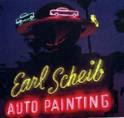
I'll paint any car, any color for $29.95!Born in San Francisco on February 28, 1908, Earl moved to Southern California with his family when he was 10. A graduate of Los Angeles High School, Earl never went to college. Instead, he got a job as a gas station attendant changing oil and tires for General Petroleum Co. in the late 1920s.
Not long after, he went into business with his own gas station on the corner of Whitworth and Fairfax. His neighbors soon began asking if he knew anyone who could paint their cars. So, each night, after closing time, Earl would paint cars in the station's lube garage. It didn't take long for word of Earl's painting service to spread, and soon there was more paint business than the station could handle.
As a result, he sold his station, rented a "shack" on the corner of Pico and La Brea (Los Angeles), and in 1937 opened the first Earl Scheib Paint and Body. His philosophy was "work hard, be on time, and don't worry about how much you make." It was a belief that underscored the way he ran his business. He still has many locations around the country today.